

Flowing through the heart of Southeast Asia like an ancient manuscript written by nature itself, the Mekong River is far more than a geographical wonder. It is a profound civilizational artery, a realm of myth, memory, and enduring human ingenuity.
From the mist-veiled highlands to the fertile embrace of Vietnam’s delta, the Mekong carries with it not only water, but centuries of cultural evolution. Along its banks, life unfolds in rhythms shaped by tide, soil, and season, where the river is both provider and philosopher, sustaining one of the world’s great agricultural civilizations.
In the Vietnamese Mekong Delta, often called the “rice bowl” of Southeast Asia, the spirit of wet-rice culture reaches its fullest expression. Here, endless emerald paddies stretch toward the horizon, reflecting a sophisticated water-based civilization that transformed sediment and seasonal floods into abundance. This is not merely agriculture, it is an enduring dialogue between humanity and ecology; a masterpiece of adaptation refined over generations.
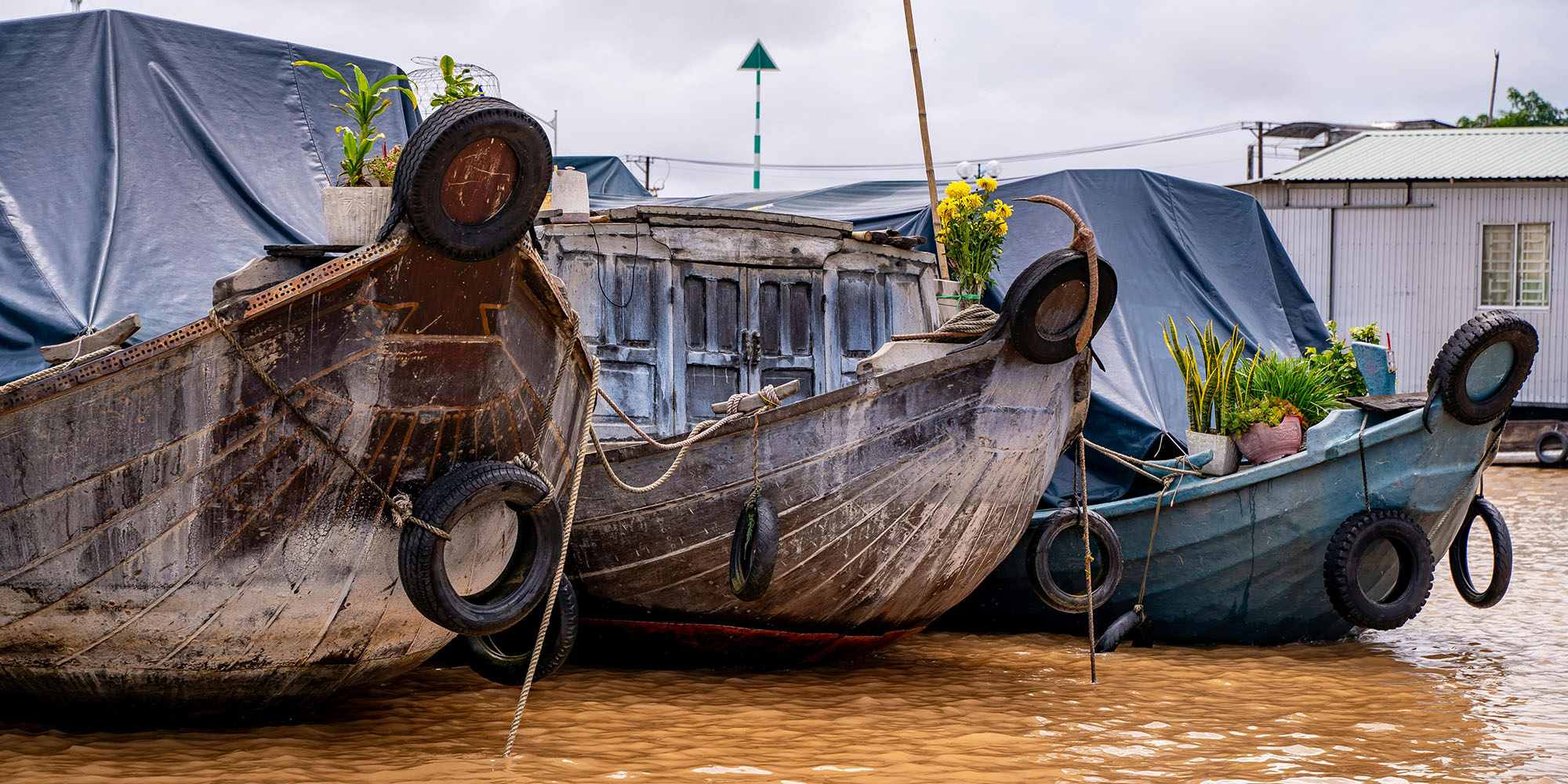
Yet the Mekong’s true enchantment lies in its living culture. Floating markets emerge at dawn like drifting kingdoms, where boats laden with tropical fruits, flowers, and local delicacies gather in a choreography unchanged by centuries. These markets are not simply centers of commerce; they are cultural theaters where trade, language, and tradition flow together upon the water.
Beyond the river channels, orchard communities flourish in lush garden landscapes known as ‘Miệt Vườn’. The pastoral world of coconut groves, mango orchards, and ancestral homes. Here, artisans preserve traditional craft villages, shaping pottery, weaving mats, crafting sweets, and building boats with knowledge passed like heirlooms through time. Each village embodies a microcosm of intangible human heritage.
Mystery has always accompanied the Mekong. Revered in folklore, spiritual belief, and regional legend, the river has long been seen as both benevolent and enigmatic—a force of life whose hidden depths inspire reverence. Its seasonal transformations, ecological richness, and cultural diversity have made it one of humanity’s most extraordinary intersections of nature and civilization.
To explore the Mekong is to witness more than a river. It is to encounter a living archive of agricultural wisdom, communal resilience, artisanal excellence, and spiritual imagination. In its waters resides the essence of wet-rice civilization and one of humanity’s most elegant examples of how culture can flourish in harmony with nature.
The Mekong is not simply a destination. It is a legend in motion—where water becomes memory, tradition becomes art, and the story of human civilization continues to flow.